Leather labels are confusing because two different things get mixed together. Grade is about which layer of the hide the material came from. Finish is about what was applied to the surface afterwards. A full-grain leather can be finished heavily, and a top-grain leather can be finished lightly. Knowing which question you are asking makes a bag’s price much easier to read.
Grade: which part of the hide you are getting
A hide is a sandwich of fibres, densest at the outer surface where the grain is, and looser below. The top layer is the strongest and the most expensive part, and what happens to it defines the grade.
Full-grain. The whole grain layer is intact, with only the hair removed. Natural markings — scars, insect bites, neck wrinkles, growth lines — are visible unless the maker chooses hides with fewer of them, which costs more. Full-grain takes a patina, darkens and softens with use, and is the most durable of the leather grades because the tightest fibre structure is preserved.
Top-grain. The grain surface is sanded or buffed away and then usually embossed or printed to give it a uniform appearance. This removes the strongest fibres and the natural markings, so the leather looks consistent and hides well. A heavily corrected top-grain can also have a polymer finish that cracks or peels after years of flexing, particularly in areas that bend, like a flap hinge.
Split leather. Cut from the lower part of the hide where fibres are looser and shorter. It is weaker in tension and almost always needs a surface finish or an embossed pattern to look like anything. Split leather is fine for linings and some straps, and poor for a bag’s main panels, where it will sag and stretch.
Bonded leather. Leather fibres and offcuts bonded with a binder, sometimes onto a fabric backing, sometimes with a polyurethane face. It can legally be called “genuine leather” or “real leather” in many markets, which is why both phrases are worth ignoring. It tears, delaminates, and has no meaningful fibre structure.
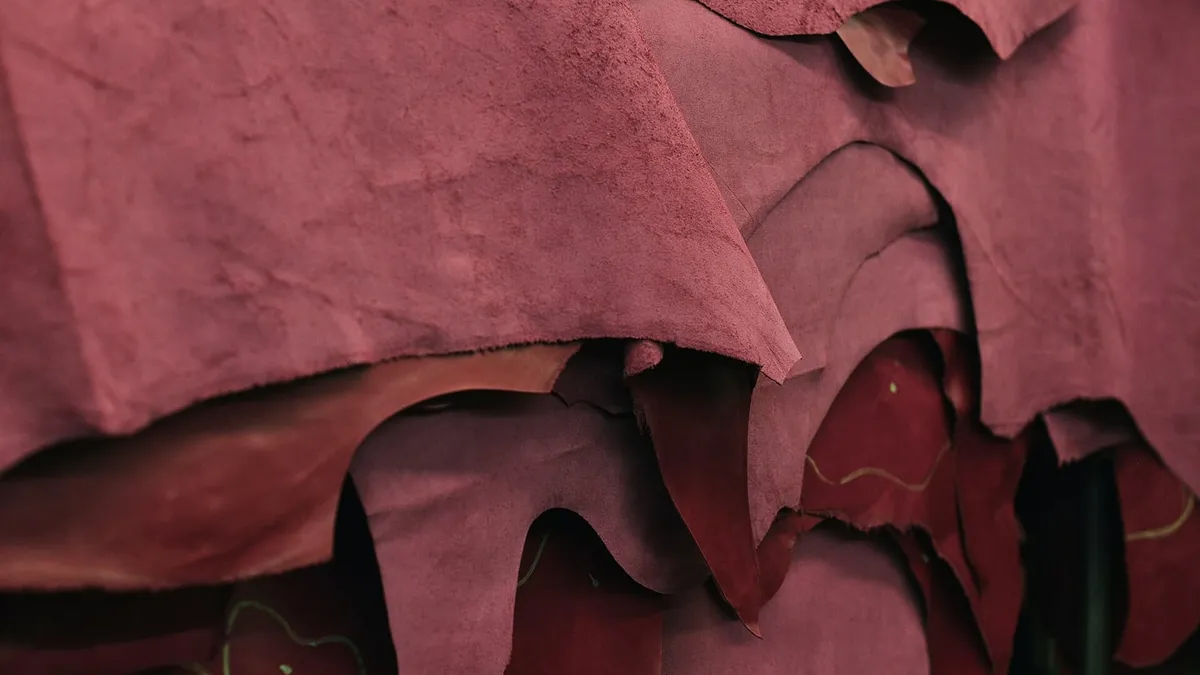
Suede and nubuck. Napped surfaces, produced by sanding either the flesh side (suede) or the grain side lightly (nubuck). Comfortable and attractive, weaker in tension than grain leather, so it is a sensible choice for linings, flaps and interiors rather than for a stressed panel.
Finish and tanning: separate from grade
Vegetable tanning uses plant-derived tannins and takes longer; chrome tanning is faster and the industry standard. Neither is automatically better. Vegetable-tanned leather tends to be firmer, ages visibly and works well for structured goods; chrome-tanned leather is more supple, more uniform and often more water resistant. What matters is whether the tannery produced a good hide of that type, which is not something a label tells you.
Finishes range from aniline (clear, thin, shows the natural surface) through semi-aniline to pigment-coated surfaces and patent. The more heavily pigmented the finish, the more the leather resists water and stains, and the less it can breathe and develop character. Any finish can be done well; a thick finish on a weak grade is what should worry you.
What to inspect on a bag
Rather than trusting a grade label, examine the bag as an object:
- Grain consistency across panels. Natural leather varies, and a maker cuts panels from similar parts of hides so the bag ages evenly. Wildly mismatched grain on two front panels means the maker was working through small offcuts.
- Edge treatment. Edges folded and stitched are the strongest, and the most expensive to do. Painted edges are perfectly normal and hide the cut fibre, but a thick bead of paint over an unburnished edge can chip at the fold lines.
- Lining. Textile linings can be good, but leather or microfibre linings generally outlast them. What matters most is whether the lining is stitched in or glued in. Glued linings come loose at the mouth of the bag, where you pull it open every day.
- Hardware. Solid brass wears well; plated zinc, die-cast zinc and aluminium bend and lose plating. Check the stress points: where the strap meets the body, the clip, the zip pull, and the underside of the strap.
- Stitching. Consistent spacing along a seam is the visible sign of a machine that was set up properly or a hand that was trained. Look for skipped stitches, wavy runs and a seam that stops short of a corner.
- Reinforcement. A structured bag holds its shape when empty because of interlining or a reinforced base. A slouchy bag is supposed to fold, but the base should still be double-layered.
- Weight and hand. Leather with substance feels dense and cool. Very light “leather” has been split thin or bonded, and will not recover from creasing.
Caring for leather without ruining it
Less is more. Wipe with a dry cloth, keep the bag out of direct sun and away from radiators, and store it stuffed so it keeps its shape. Condition once or twice a year, not monthly: over-conditioning saturates the fibres, darkens pale leathers and can soften a structured bag out of shape. Avoid oil-based products on aniline finishes and never soak a lining. Water marks are best left to dry away from heat rather than dabbed aggressively.
Store in a dust bag rather than sealed plastic, which traps moisture and encourages mould. Rotate bags rather than leaving one unused for months — leather that flexes stays supple, and leather that sits dries out.
A short buying rule
Choose the grade for durability and the finish for the way you actually use the bag. A full-grain, lightly finished leather is the most forgiving of daily wear, and it will show marks — that is the trade. A corrected, heavily pigmented leather stays neat for years and then fails at the fold rather than wearing in. Both are legitimate; only one is being sold to you as something it is not.