A specification sheet is the most useful document a watch buyer gets, and most people read the two numbers that matter least. Diameter and brand occupy the headline; fit, water resistance and serviceability live in the small print. Here is how to read the whole sheet and which figures to check against your own wrist.
Diameter is not size
Case diameter is measured across the case, usually excluding the crown, and it tells you almost nothing on its own. A 39 mm watch with long lugs and a flat caseback can wear larger than a 42 mm watch with short lugs and a domed back. What actually determines how a watch sits:
- Lug-to-lug length. The distance from the tip of one lug to the tip of the other. This is the number to compare against your wrist width, and it is the figure most often missing from a product page. Ask for it.
- Thickness. Measured caseback to crystal, and it decides whether the watch slides under a shirt cuff and whether it feels top-heavy. A domed crystal adds apparent height.
- Lug width and taper. Strap width in millimetres. A taper toward the clasp affects comfort and the look of the bracelet.
- Caseback shape. A flat caseback sits higher on the wrist than a domed or shaped one, even at identical thickness.
- Weight. A full steel bracelet can add a substantial amount, and its distribution matters as much as the total. Titanium feels noticeably lighter for the same dimensions.
If you are between sizes, lug-to-lug is the figure that decides it. A useful rule is that the lugs should not overhang the flat part of your wrist.
Water resistance: a static rating, not a promise
Water resistance is stated in metres or bars, and the two are not interchangeable in practice: 10 bar equals 100 metres, but both describe a static pressure test in a laboratory, not the pressure your wrist generates when you jump into a pool.
The widely used practical reading is:
- 3 bar / 30 m: splash and rain resistant. Not for swimming or showering.
- 5 bar / 50 m: hand washing and brief immersion. Showers are risky because of heat and soap.
- 10 bar / 100 m: swimming and snorkelling, provided the crown and pushers are properly secured.
- 20 bar / 200 m: the entry point for diving use.
Water resistance depends on gaskets, a screw-down crown, a screw-down caseback and a pusher design, and it degrades with age and temperature shocks. A watch rated to 100 metres from 1995 should be pressure tested before you trust it. Heated water, steam, chlorine and soap are harder on gaskets than cold water. Also check whether the pushers can be used underwater, because on many chronographs they cannot.
Crystal and dial
Sapphire is hard and scratch resistant, mineral glass is softer and cheaper, acrylic is the softest and the most repairable. Anti-reflective coating improves legibility and, on the outside of a crystal, shows scratches over time; inner-only coating avoids that but is less effective. A domed crystal adds character and glare; a flat crystal is thinner and less distorting.
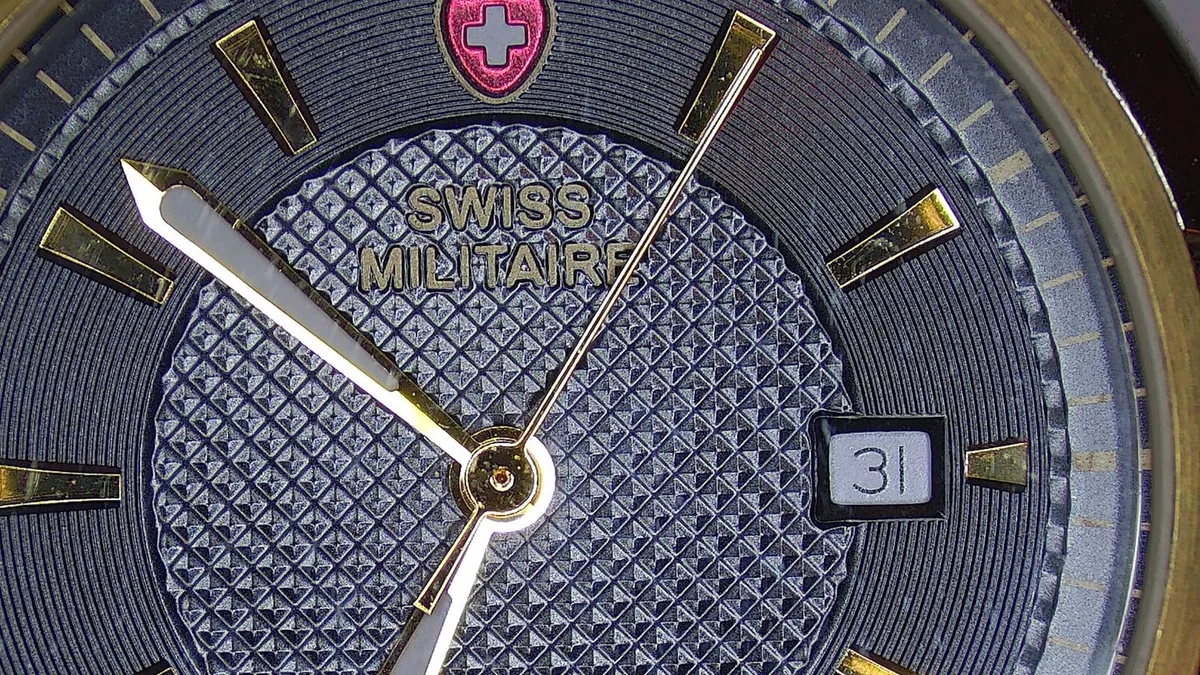
Dial details worth noting are printed rather than applied markers (applied indices cost more and catch light), lume type and whether the hands are polished, brushed or painted. None of this affects timekeeping, and all of it affects what the watch looks like in daylight rather than in a studio photograph.
Movement specifications
The movement line is where a sheet gets genuinely informative:
- Power reserve. How long the watch runs off the wrist. Around 40 hours is conventional; longer means the winding system is more efficient or the mainspring is larger.
- Frequency. Beats per hour, commonly 21,600 to 28,800. Higher frequency can improve rate stability and shorten the service interval discussion; it is not a quality score.
- Accuracy statement. Look for a stated tolerance in seconds per day and, crucially, whether it is a manufacturing limit or a tested individual result. A published tolerance band that is tested and certified means more than a claim of accuracy.
- Jewels. Bearings, not a quality rating.
- Hacking and hand-winding. Practical features that make a watch easier to live with.
- Regulation and adjustment positions. A movement regulated in several positions will generally keep better time in ordinary wear.
Materials and bracelet specification
Case material is usually listed as a steel grade, titanium grade, precious metal with a purity (18k, 14k, 950 platinum) or a coating such as PVD or DLC. Solid versus plated hardware matters enormously over time, and it belongs in the same line as the bracelet.
Bracelet construction is where good spec sheets separate themselves. Look for solid links versus folded, screws versus push pins (screws are easier to service without damage), the number of positions of micro-adjustment in the clasp, whether the clasp has a divers’ extension, and whether the bracelet tapers. A bracelet is roughly half the feel of a watch on the wrist, and a poor clasp will annoy you long after the dial has stopped being interesting.
What no specification sheet will tell you
Numbers do not cover hand finishing quality, how securely the crown threads engage, whether the dial printing is crisp under magnification, whether the lugs take aftermarket straps without gaps, or how well the watchmaker relationship works. They also say nothing about parts availability.
They do not tell you whether the value will hold, and they cannot tell you what a watch feels like on your wrist — the one thing a specification sheet is worst at.
How to use the sheet before you commit
Ask the seller for lug-to-lug, thickness and weight if they are missing, and current photographs of the clasp and caseback. Confirm the service history and whether the bracelet is original to the watch, since swapping bracelets is common and affects value.
On arrival, before you decide to keep anything, check the rate over several days against a reliable reference, confirm the water resistance if it matters to you, and check the crown action and date change. A specification sheet is a claim. Handling the watch is the test.